West Africa, the Cocoa Heartland
Where most of the world's cocoa grows. Most of the world's cocoa now grows in West Africa, led by Ivory Coast and Ghana. How cacao arrived there and how the farms work today.
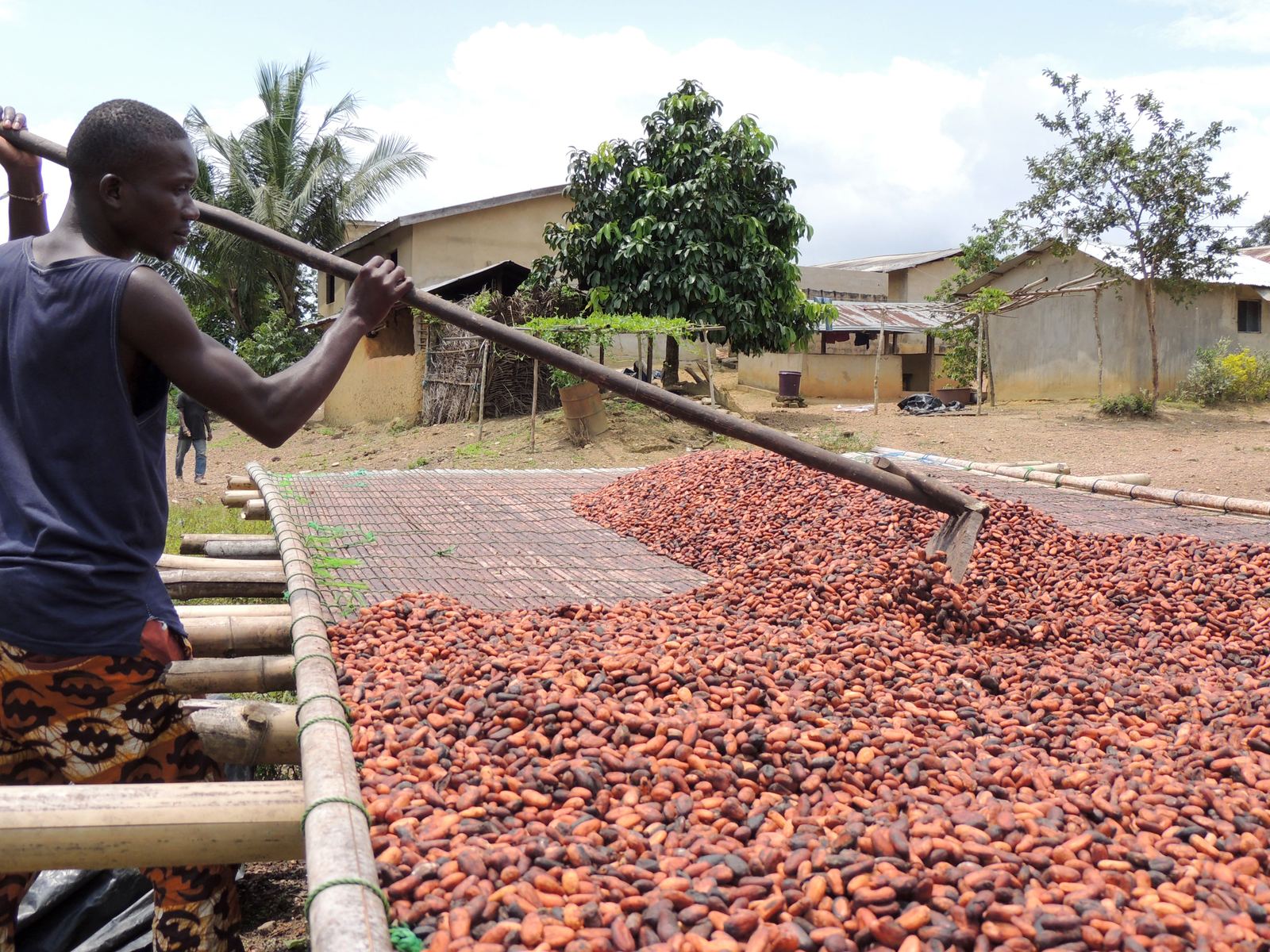
Drying the harvest: KokoDZ, CC BY-SA 4.0
How cacao crossed the ocean
Cacao is not native to Africa. In the early nineteenth century it was carried from Brazil to the island of São Tomé, in 1824, and from there it spread to the mainland. In the Gold Coast, now Ghana, the person most often credited is Tetteh Quarshie, a blacksmith who travelled to the island of Fernando Po, today's Bioko, in 1870.
He returned in 1876 with cacao seeds, planted a farm at Mampong in the Akuapem hills by 1879 and other farmers soon followed his lead. Ghana's cocoa exports began in 1891. A hospital in Mampong now carries his name.
The world's cocoa belt
West Africa grew quickly into the centre of the cocoa world. Ghana became the largest producer in 1911 and held that place for decades, until Ivory Coast overtook it in the late 1970s. In 2024 global cocoa bean production was about 5.8 million tonnes, and Ivory Coast alone grew well over a third of it, with Ghana second.
Together, these two neighbours supply around half of the world's cocoa, and West Africa as a whole grows the large majority. Nigeria and Cameroon are also important producers.
Life on a cocoa farm
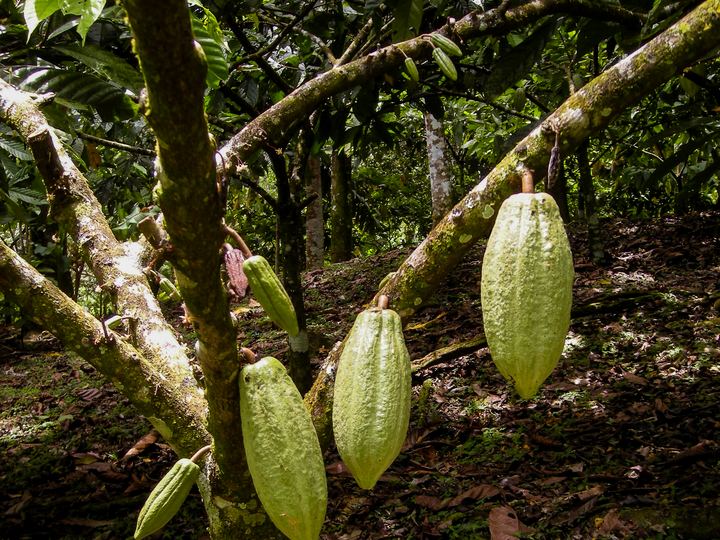
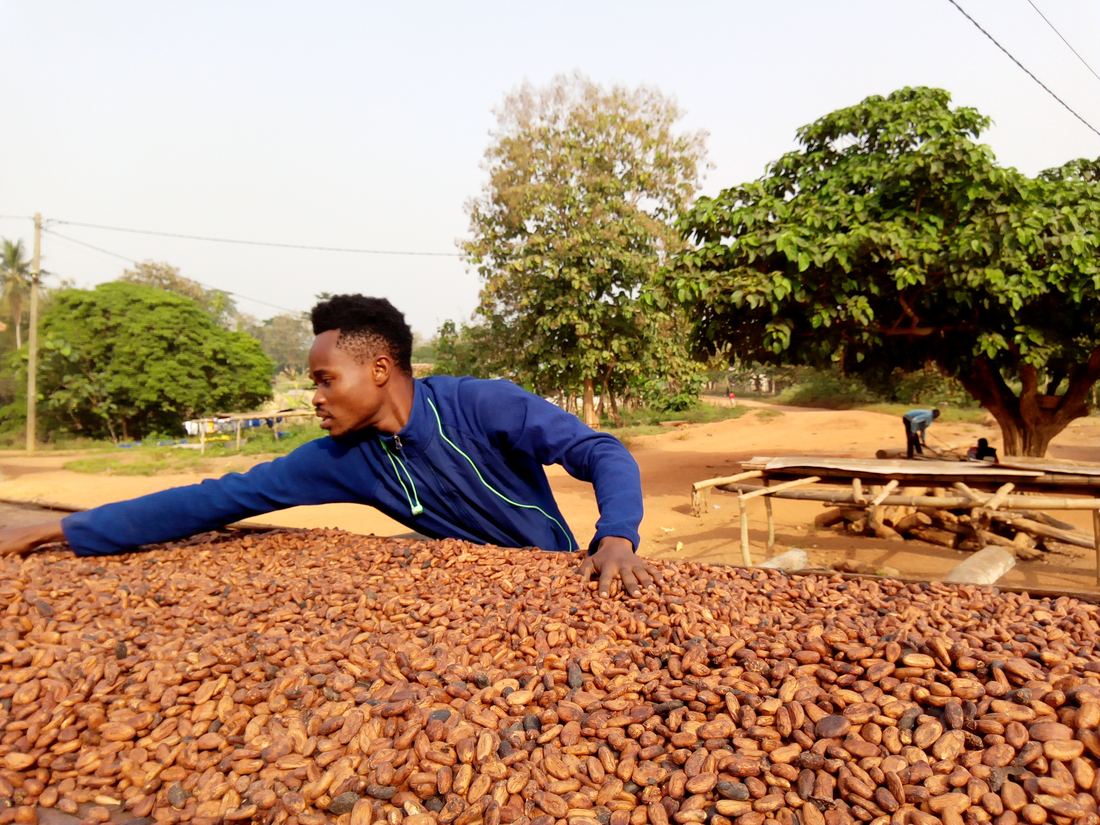
Most West African cocoa comes from small family farms rather than big plantations. Farmers cut ripe pods by hand, split them open and scoop out the beans and pulp. The wet beans are piled in heaps or boxes and covered with banana leaves or mats to ferment for several days, then spread out to dry in the sun on mats or raised tables.
Once dry, the beans are bagged and sold to buyers. In Ghana, the Ghana Cocoa Board handles export and quality control. Only after shipping, often to grinding plants in Europe or elsewhere, are the beans turned into cocoa and chocolate.
Challenges ahead
Cocoa farming faces real pressures. Plant diseases such as cacao swollen shoot virus and black pod rot damage trees, while hotter, drier weather threatens the conditions cacao needs. Low farm incomes, child labour and forest loss have also drawn wide attention, and many companies now run certification and tracing programmes in response.
When you read a bar's origin label, it often points back to these small farms in Ivory Coast and Ghana, where the chocolate story really begins.
- Drying the harvest: KokoDZ, CC BY-SA 4.0
- Drying beans in Ghana: King Bangaba, CC BY-SA 4.0
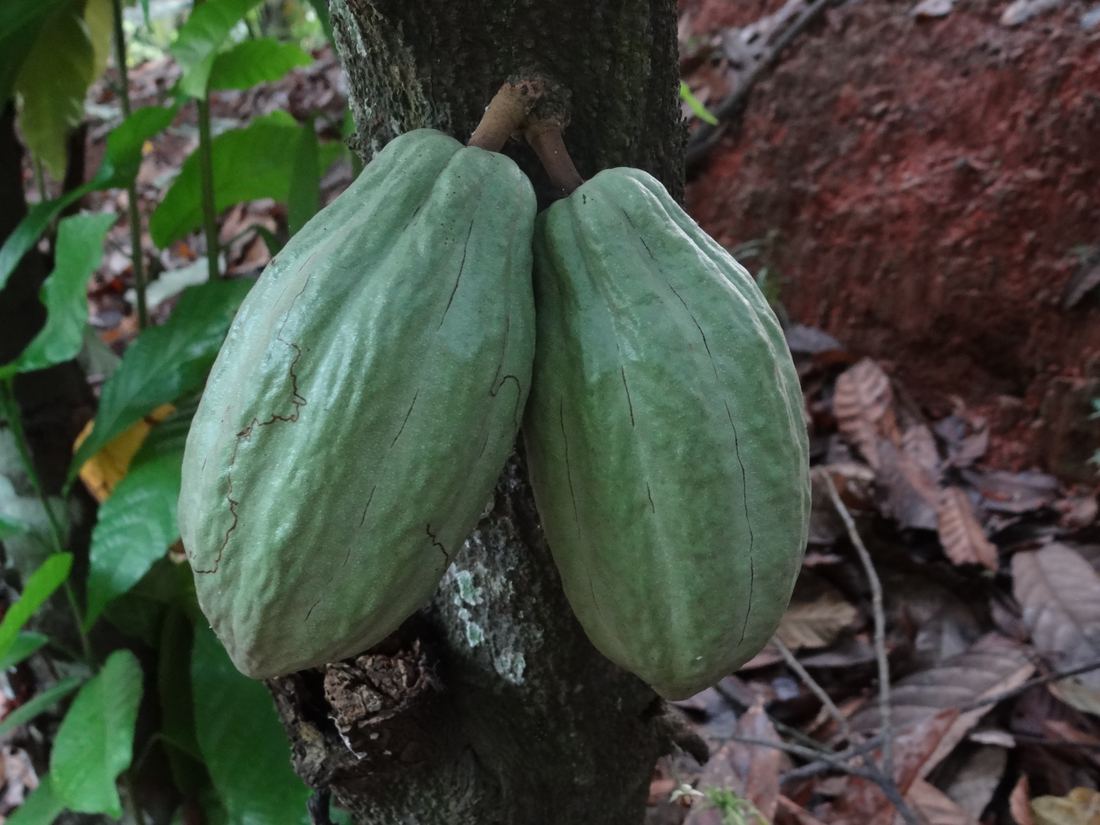
- Pods in Ivory Coast: Hanay, CC BY-SA 4.0
Text written by Chocolate Era.