Bean to Bar: How Chocolate Is Made
Every step from pod to wrapper. Fermenting, drying, roasting, winnowing, grinding, conching and tempering. Follow a cacao bean through every step on its way to a chocolate bar.
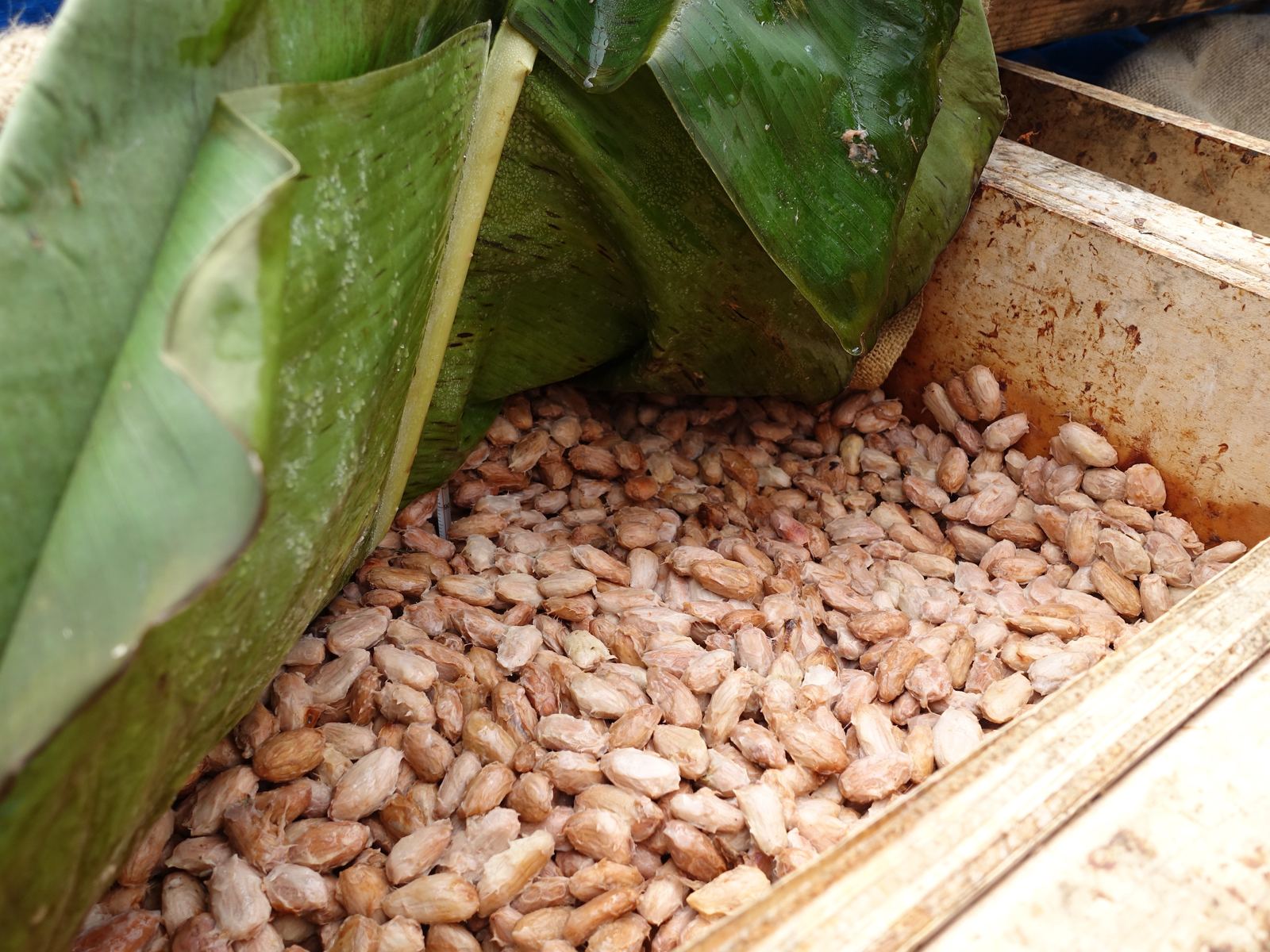
Fermenting cacao: Scot Nelson, CC0
On the farm: ferment and dry
Chocolate flavour starts on the farm. After the pods are opened, the seeds and their sticky pulp are piled in heaps or boxes and covered with banana leaves or mats for about three to seven days. Yeasts and bacteria feed on the pulp, which heats up and drains away, and the seeds change from purple to brown as chemical reactions build the precursors of chocolate flavour.
The beans are then dried, often in the sun, until they are light and stable enough to ship. Drying too fast can leave them sour, so farmers turn them regularly. It takes about 400 dried beans to make one pound of chocolate.
In the factory: roast, crack, grind
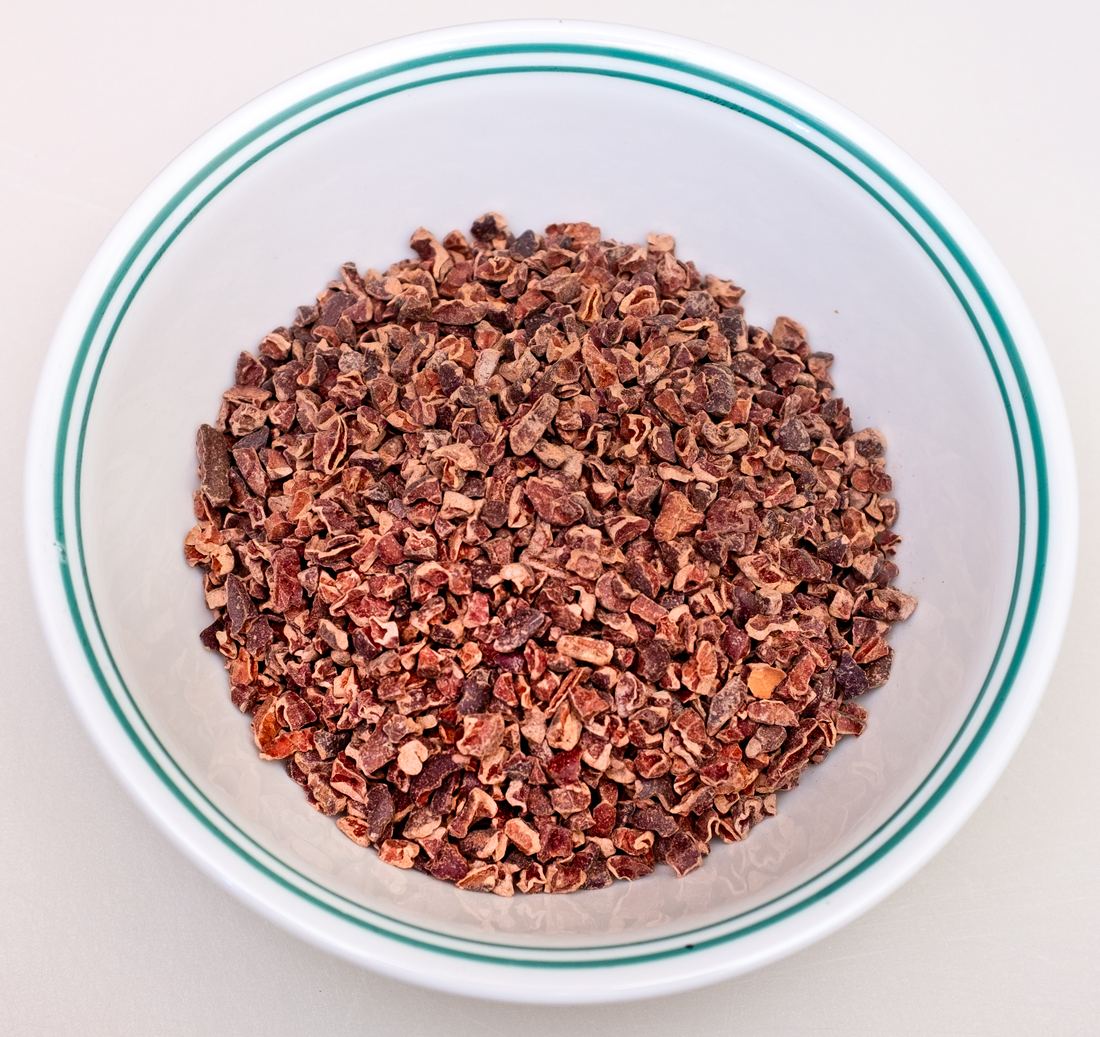
At the chocolate maker, beans are roasted. A light roast keeps fruity, acidic notes, while a darker roast gives a stronger, more bitter taste. The roasted beans are cracked and the papery shells are blown away in a step called winnowing, leaving crunchy pieces called nibs.
The nibs are ground until their fat melts and they turn into a thick, dark liquid called chocolate liquor or cocoa mass. Despite the name, it contains no alcohol. It is roughly half cocoa butter and half cocoa solids, and it is the base of every dark and milk chocolate.
Refining and conching
To make a bar, the maker mixes chocolate liquor with sugar, extra cocoa butter and, for milk chocolate, milk powder. The mix is refined between rollers until the particles are too small for the tongue to feel. Then comes conching, the step invented by Rodolphe Lindt in 1879, where the chocolate is stirred and aerated while warm.
Conching drives off harsh, acidic flavours and coats every particle in fat, giving a smooth, mellow taste. A modern rotary conche can finish 3 to 10 tonnes in under 12 hours, while traditional or craft makers may conch for a day or more.
Temper, mould, wrap
Finally the chocolate is tempered, carefully cooled and rewarmed so the cocoa butter sets into the right crystals, then poured into moulds, cooled and wrapped. The cocoa percentage printed on the label counts everything that came from the bean, both solids and cocoa butter.
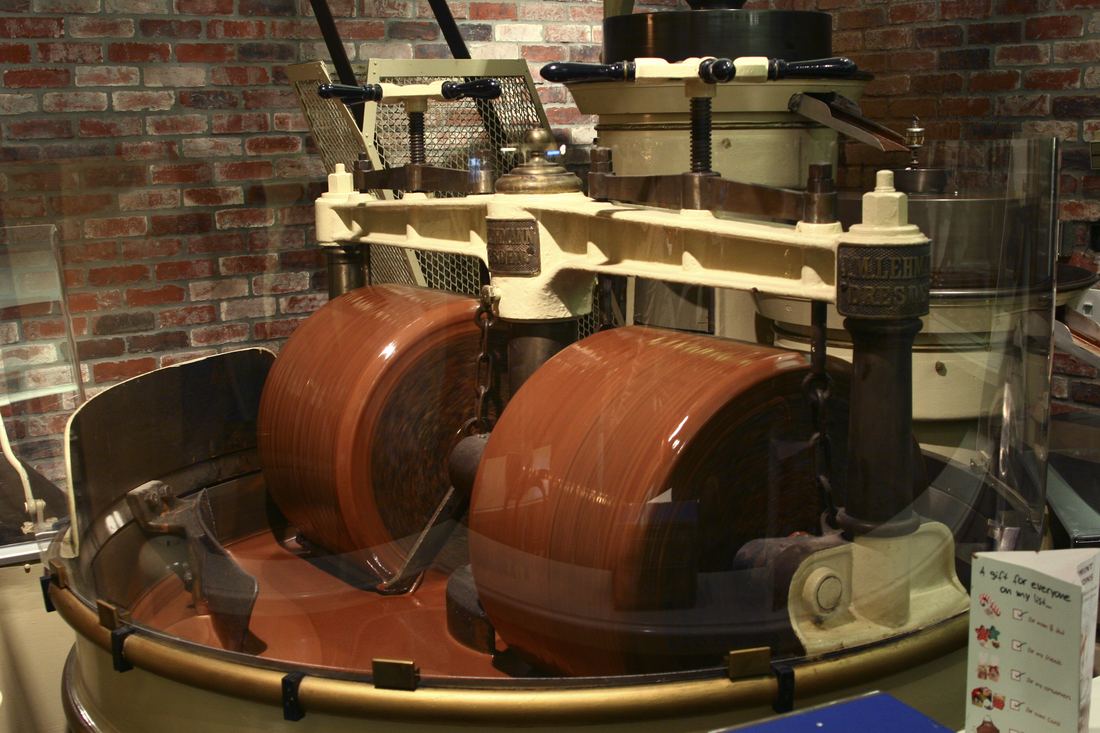
Small bean-to-bar makers do every one of these steps themselves, often with tabletop stone grinders called melangers, which is why their bars can taste so different from batch to batch and farm to farm.
- Fermenting cacao: Scot Nelson, CC0
- Roasted cocoa nibs: Ll1324, CC0
- A stone melanger: Sanjay Acharya, CC BY-SA 3.0
Text written by Chocolate Era.
← West Africa, the Cocoa HeartlandMilk, Dark and White Chocolate →